
From Grief to Hope: The Myth of "Moving On"
“Blessed are those who mourn, for they will be comforted.”— Matthew 5:4
Why haven’t they moved on from that yet? It’s been a couple of years. I’ve heard people say that about someone who has been through a death or loss in the past. It’s time to move on. But there isn’t a timeline for grief. Sure, it may soften, but it never truly goes away, at least for most of us in the human race.
As an 8-year-old child, I don’t remember thinking about a time limit for grief. I do remember going to camp a month after my daddy died. I felt close to him there because we had attended the small country church when we were unable to make it to town. Our little country school was just down the road from the little camp and church. I knew the camp and church pastor and his family. Yet, a year later, attending camp for my second time became harder than the first month after daddy’s death.
I don’t know what caused it to be harder; maybe just the idea that he was really gone from this earth had hit home. I remember crying and talking to my camp counselor about it, like it was new. Thankfully, no one told me to “just get over it.”
Thanks for reading Hope Lives Here! Subscribe for free to receive new posts and support my work.
We Don’t Move On. We Move Forward.
The thing is, I didn’t leave my daddy behind. I didn’t stop loving him. And I definitely didn’t forget how he affected my life. He has been in every area of my life.
When I went hundreds of miles away to college, I felt his influence because he had attended the same college I was attending. When I got married, my twin brothers walked me down the aisle (who better than two guys who probably looked just like him). I had two children and wanted to be sure I followed my parents’ example in raising them. I know that many times I thought back to what they would do in different situations. I told them stories about Daddy so they would feel that they knew some things about him.
Eventually, after I had become “Nana,” I wrote a book about my daddy and the day he died in a farm accident. Even at that age, I felt it was important to share about his life and what he meant to me in that children’s book, hoping it would touch many others who might have lost a loved one early in life.
Love Doesn’t End When Someone Is Gone
I know many people who feel such closeness to a family member, even after they are gone. The memories often become even brighter, the stories are shared in and outside of the family group, traditions are passed on, and somehow, we find ourselves doing things that the loved one might have done. I can see that very clearly in my brothers - they like to tease, sing little tunes (or make them up), spend time with their grandchildren, and remember the good times.
Grief is not a part of our emotions to make us forget people. Grief is what helps us learn how to deal with that deep love in a different way.
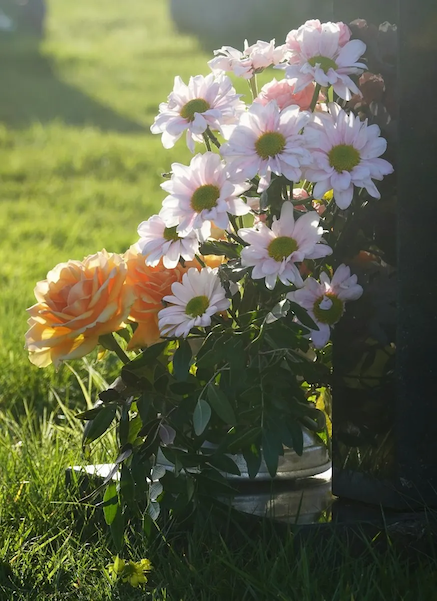
Photo by Callum on Unsplash
Why Certain Days Still Hurt
We ask ourselves, why does it still hurt? There is no clear answer. It pops up when the anniversary of the death comes around. As we attempt to celebrate the holidays, there is an emptiness in our hearts because that loved one isn’t around. When their birthday arrives, we turn inward, looking for a way to honor them. And of course, there are those unexpected reminders that show themselves at the worst times. In public. During church. When talking to a friend. After a good laugh over a memory. The tears show up and threaten to spill over into a complete breakdown. I’ve been there. Sometimes I don’t even try to hide it. It’s a part of who I am.
Grief often surprises us because our hearts are tender, and grief is like an unwanted lifelong companion. I don’t say that to discourage you, readers. Grief does soften more often than it hits hard. But it’s a strong human emotion that isn’t easily dismissed when it rears its head unexpectedly.
What Healing Really Looks Like
So, how do you know when healing is occurring? As I mentioned in previous posts, healing can be small things like a memory that makes you smile, a shared story about the loved one, photographs that remind you of a good time. Even helping someone else who is in a tough place can be part of healing. When you can talk about your loved one without fear or breaking down, you are showing signs of healing.
Healing doesn’t mean grief has disappeared. Healing is living with hope and gratitude alongside grief.
Teaching Children They Don’t Have to Forget
As a child who lost a loved one early in life, I was never told that I needed to forget about my daddy. I was blessed to be surrounded by family members including grandparents, aunts, uncles, cousins, and community/church members who were a great support to my mom and siblings. I do think there was a tenderness there where others didn’t “bring him up” in conversations in order to protect us from further grief, but as I’ve gotten older, I’ve never felt like I needed to hold back on sharing about Daddy and what my family went through with loss.
These are some things I would share about childhood grief that may help those who are counseling or walking alongside a grieving child. First, I felt encouraged to talk about Daddy. If I teared up or had problems talking about him, others would take cues and change the topic. I think you have to take signals from the child with whom you are working.
As the adult, keep pictures available for the child to look at. Don’t put them away. If you hide them, it feels like you are trying to erase that person. Share stories that bring memories, because that remembrance is good for them. Those memories are what will get that child through the darker days. If they have questions, listen and offer answers or advice if it is warranted. Be honest and tell the child if you don’t know the answer.
In my book, And the Sun Came Up: A True Story of Grief and Hope, I share the Gospel of Jesus Christ. To me, hope comes from Jesus and what He did for us through His death on the cross. If you don’t know much about Him, go to church or talk to a pastor. They can lead you to an understanding of where hope comes from. I also created a hope journal that a teenager can do on their own or children can work through with an adult. It is called Sunlight for the Soul: A Hope Journal for Kids Walking Through Sadness. I would love to hear from anyone with questions about what I share in either book as well. Contact me at marygracejohnsonauthor@gmail.com
The Sun Still Comes Up
For many years, I thought that I had dealt with the grief over losing my daddy. I thought that at some point it wouldn’t hurt anymore. When I still felt the hurt and pain of grief, I thought maybe there was something wrong with me. It took a counselor asking me if I had ever grieved over my daddy. I thought that was a strange question at the time, but I realize now that I hadn’t worked through it in a way that would move me forward. I had been stuck in trauma, thinking that healing meant reaching a day when grief was done. Instead, I have found that grief is going to exist no matter what, but there is a path forward through hope. I still miss my daddy so very much. I always will. Until I see him in heaven when my time comes, I have to trust that God’s faithfulness will get me through. Daddy wasn’t my only loss. Time after time, God has shown He will be with me and hold me through each trial that comes my way. And He has met me in every season since that day on the farm. While I didn’t move on from my loss, I did move forward, because God carried me every step of the way.
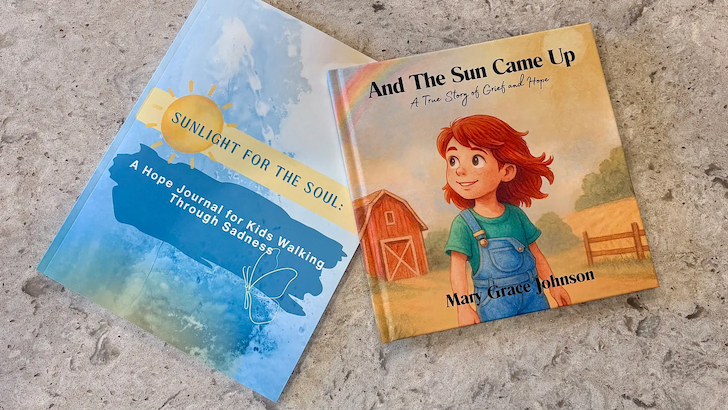
And the Sun Came Up book and Sunlight for the Soul journal
Reflection Question
What grief or hurt do you still carry with you today, and how has God met you in that journey?
Simple Activity
Write down one good memory of someone you miss and thank God for that gift. List five things about that person that you are grateful for.
Breath Prayer
Inhale: Thank You for the memories.
Exhale: Thank You for Your faithfulness.
Closing Hope
If we try to forget someone we’ve loved and lost, we are not honoring their memory. We bring them honor by moving forward with hope.

Photo by Elina Upmane on Unsplash
